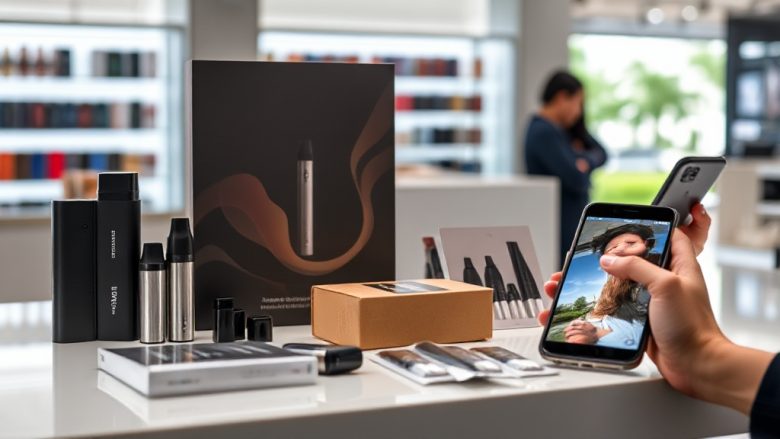
Discreet and Protective: Designing a Better Vape Parcel
A parcel carrying vape products has a split personality. From the outside it must reveal nothing; from the inside it must protect everything. That dual brief is the starting point for any serious critique of delivery packaging, and it is exactly the brief that separates a thoughtful sg vape lana shipment from a careless one. The search intent behind this topic is practical: readers want to know what a well-designed vape parcel looks like, why certain materials are chosen, and where the trade-offs sit. The short answer is that discretion and protection pull in opposite directions, and good packaging is the art of balancing them without letting either side collapse.
The Outer Shell: What the Box Says Before It Is Opened
The outer appearance is the first design decision and the most consequential one for discretion. A parcel that announces its contents through branding, product silhouettes or suggestive text fails the brief immediately. The strongest outer shells are deliberately boring: a plain corrugated mailer, a neutral poly bag, or an unbranded box with a generic shipping label. Boring is a feature here, not a compromise.
There is a second layer to outer-shell design that is easy to miss. Shape matters as much as print. A rigid, rectangular box with a clean edge reads as ordinary e-commerce; a lumpy, oddly proportioned parcel invites curiosity. Designers who care about discretion therefore favour standardised formats that blend into a stack of everyday deliveries. This is also why a vape supplier singapore operation that ships at volume tends to standardise its mailer sizes rather than improvise per order.
Surface, Texture and the Curiosity Problem
Texture is a subtle variable. Glossy finishes and heavy inks draw the eye; matte, uncoated surfaces recede. A parcel that feels like any other parcel is less likely to be handled with curiosity. The trade-off is that cheap uncoated stock tears more easily, so designers often accept a slightly thicker board to keep both discretion and durability.
Internal Cushioning: Protecting Devices Without Bulk
Inside the parcel, the design problem flips. Disposable devices and pod systems are light but fragile in specific ways: mouthpieces can crack, pod seals can weep, and rigid bodies can scuff against each other. The cushioning has to absorb shock without adding so much bulk that the parcel becomes conspicuous or expensive to ship.
Moulded pulp trays and die-cut foam inserts are the premium answer. They hold each unit in a fixed position, which prevents the rattling that both damages products and creates an audible clue about contents. Bubble wrap is the cheaper answer, but it shifts, compresses and sometimes leaves a parcel that sounds like a bag of loose parts. For a Sg vape disposable order, where several units may travel together, the difference between a fixed tray and loose fill is the difference between a quiet parcel and a noisy one.
The Void-Fill Question
Empty space inside a box is the enemy of protection and the friend of movement. Designers fill voids with paper, air pillows or starch-based loose fill, each with a different profile. Paper is recyclable and quiet; air pillows are light but pop; starch peanuts are protective but visually messy if the parcel is opened in public. The choice depends on how much movement the contents can tolerate.
Sealing and Labelling: The Quiet Details That Decide Discretion
Sealing is where many parcels quietly fail. A single strip of tape across a flap is easy to lift and reclose, which undermines both security and the impression of care. Tamper-evident seals, double tape lines and reinforced corners cost little but change how the parcel behaves in transit and how it is perceived on arrival.
Labelling is the most overlooked part of the brief. A shipping label that lists product names, quantities or a suggestive sender name defeats every other discretion measure. The strongest labels carry only what logistics requires: a name, an address, a tracking code and a neutral sender reference. For anyone ordering through a SG Vape same day delivery service, the label is often the only text a recipient or a household member will read, so it deserves the same scrutiny as the box itself.
Why Neutral Sender Names Matter
A neutral sender name is a design decision, not a marketing one. It keeps the parcel unremarkable at the door, in a mailroom or in a shared lobby. The trade-off is reduced brand recall, which is why some retailers resist it. For a Singapore vape delivery operation, the better compromise is a short, generic sender code that customers can recognise on their tracking page without anyone else being able to decode it.
The Trade-Offs: Where Discretion and Protection Pull Apart
Every design choice in a vape parcel sits on a spectrum between hiding and protecting. The table below sets out the main tensions a designer has to resolve.
| Design choice | Helps discretion | Hurts protection |
|---|---|---|
| Plain poly mailer | Unremarkable, silent | Little crush resistance |
| Rigid outer box | Looks ordinary, stacks well | Larger footprint, more visible |
| Moulded tray insert | Stops rattling | Adds weight and cost |
| Loose void fill | Cheap, flexible | Can shift and make noise |
| Neutral label | Reveals nothing | Reduces brand recognition |
The resolution is rarely a single material. It is a layered system: a plain outer shell, a fixed internal tray, quiet void fill and a minimal label. Each layer covers the weakness of the one before it. A sg vape delivery service that treats packaging as a system rather than a bag tends to produce parcels that survive transit and arrive without drama.
Cost, Weight and the Courier Interface
Weight is the hidden constraint. Every gram of cushioning adds to shipping cost and to handling time. Designers therefore look for materials that protect per gram rather than per square centimetre. Moulded pulp is heavier than air pillows but holds position better; a thin corrugated sleeve is lighter than a full box but protects only one axis. The right answer depends on the product mix, which is why a lana vape delivery order containing several devices may use a different configuration from a single-unit order.
Couriers also impose their own design constraints. Sorting machines crush weak corners, and automated scanners need a flat, clean label area. A parcel that is beautiful but unscannable will be delayed, and delay is its own form of failure. The best designs leave a dedicated label zone free of tape, seams and texture.
Closing: The Parcel as a Finished Object
Judged as a design object, a good vape parcel is unremarkable on the outside and disciplined on the inside. It reveals nothing to a curious glance and absorbs everything a sorting belt can throw at it. The materials are chosen for quietness as much as strength, and the label is treated as part of the design rather than an afterthought.
The lesson for anyone evaluating packaging is to open a parcel slowly and notice each layer: the shell, the insert, the fill, the seal, the label. Each one is a decision, and each decision has a cost on the other side of the brief. A parcel that gets all five right is not flashy. It is simply correct, and that is the highest compliment a discreet, protective design can receive.